Call Us Now : +91 8981223485

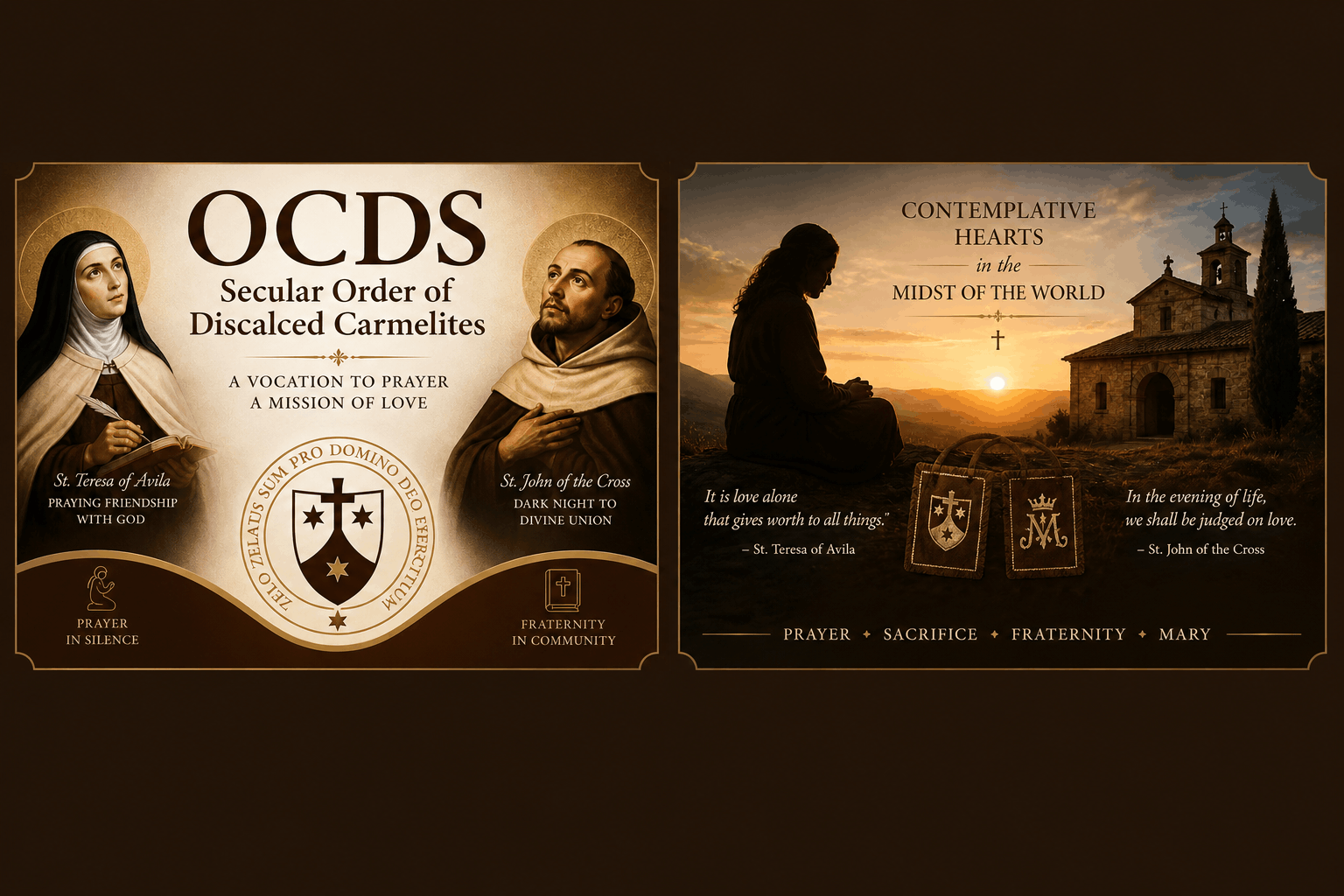
The Secular Order of Discalced Carmelites (OCDS)
Ordo Carmelitarum Discalceatorum Saecularis
What Is the OCDS?
The Secular Order of Discalced Carmelites is a Catholic lay organization whose members
live Carmelite spirituality “in the world” rather than in a monastery. It is the secular (third
order) branch of the Discalced Carmelites, open to lay people and diocesan priests who feel
called to this way of life while remaining in their families, jobs, and ordinary daily routines.
Members belong juridically to the Discalced Carmelite Order and live in fraternal
communion with its friars and nuns, all tracing their roots to the Rule of St. Albert, St.
Teresa of Jesus (Ávila), and St. John of the Cross.
It is not a charity, parish group, or activity-based organization. It is a vocation: a call to a
hidden, contemplative life with God, lived out quietly within ordinary circumstances.
Success isn’t measured in projects or numbers — the mission is largely invisible, centered
on interior transformation through prayer.
Core Spirituality
At the heart of OCDS is prayer and relationship with God. Key elements include:
1. Daily mental (silent) prayer
2. Love for Scripture
3. Devotion to the Virgin Mary, especially as Our Lady of Mount Carmel
4. Cultivating a deep interior life amid a busy daily schedule
The Rule of Life
OCDS members follow a Church-approved Rule of Life rooted in Carmelite tradition:
Members live the evangelical counsels of chastity, poverty, and obedience in a manner
adapted to secular life. Some, after discernment and with permission, may later make
private vows of chastity and obedience.
Who Can Join?
Anyone who is:
1. A practicing Catholic
2. Married, single, or a priest
3. Genuinely drawn to prayer and spiritual growth
4. Willing to commit to a multi-year formation process and community life
The call typically begins with a desire for deeper prayer, silence, and closeness to God. The
person approaches a local OCDS community to begin discernment.
Formation: A Gradual Process
Formation unfolds in stages over roughly 5–6 years: